
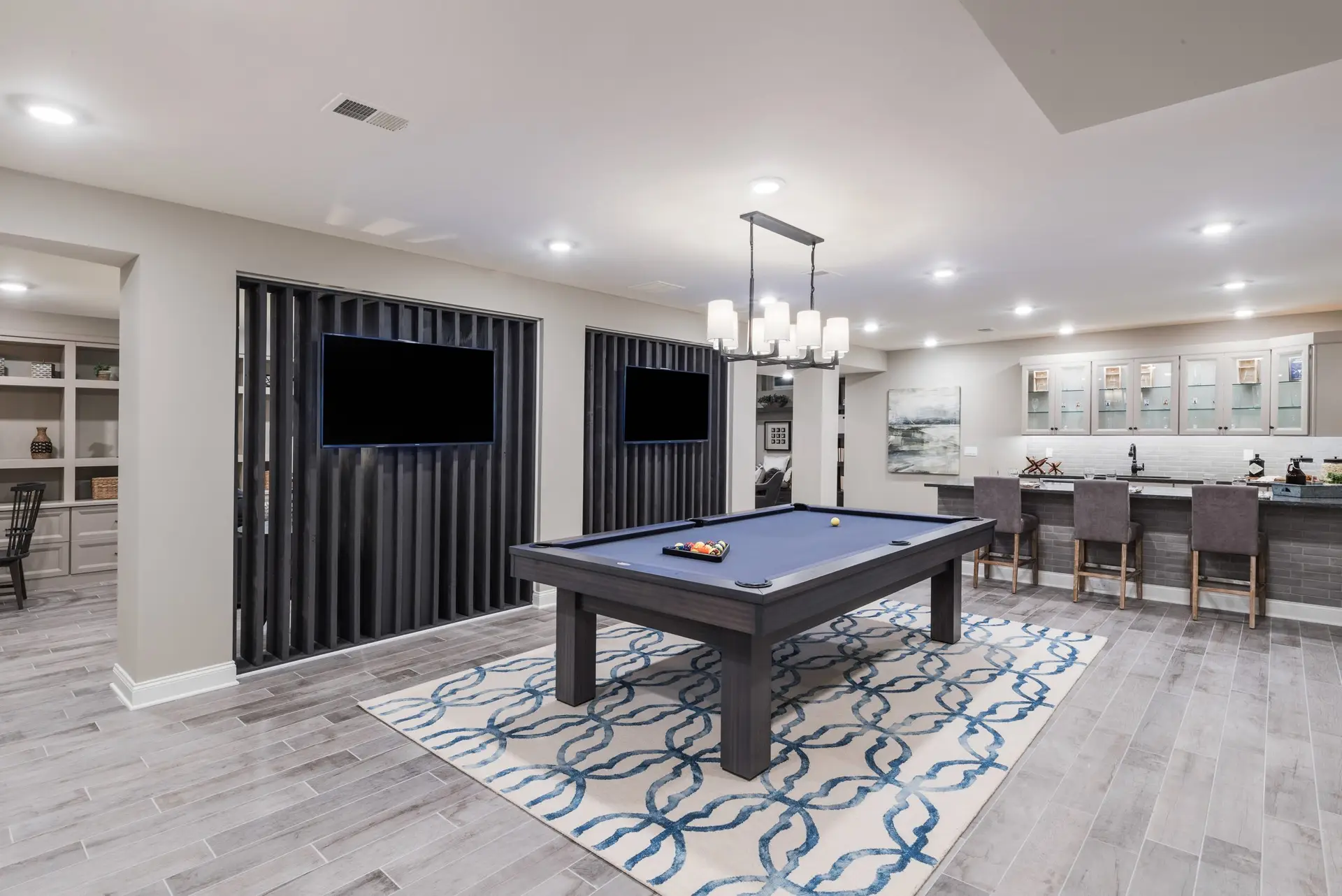

Finishing a basement is one of the best ways to expand your home’s usable living space, but basements require a different approach than any other renovation. In Hull, Gatineau, Aylmer QC, Chelsea QC, and Rockcliffe ON, homeowners often deal with moisture, colder temperatures, and older foundation conditions that make proper planning essential.
If you’ve been searching basement finishing near me or exploring basement remodeling ideas, the most important goal is always the same:
A finished basement must be clean, dry, comfortable, and built to last.
Below is a step-by-step plan that outlines how basement finishing should be done correctly, from the first inspection to the final details.
Step 1: Start With a Moisture and Foundation Assessment
Before any basement remodeling begins, the space must be evaluated for moisture issues. Basements are below grade, which means water and humidity management is critical.
This first step includes checking for:
- Wall cracks or foundation seepage
- Damp corners or musty smells
- Poor drainage outside the home
- Signs of past flooding
- Condensation around windows or pipes
Finishing a basement without addressing moisture first can lead to mold, damaged materials, and costly repairs later.
Step 2: Waterproofing Comes Before Finishing
If moisture is present, waterproofing must happen before insulation or drywall is installed.
Common waterproofing solutions include:
- Sealing foundation cracks
- Installing sump pumps if needed
- Adding drainage improvements
- Applying moisture barriers on walls and floors
- Upgrading exterior grading around the home
A clean, dry basement is the foundation of every successful basement finishing project in Hull.
Step 3: Plan the Basement Layout With Purpose
Once the basement is dry, the next step is planning what the space will become.
Popular basement remodeling ideas in Hull include:
- Family entertainment rooms
- Home gyms
- Guest bedrooms
- Basement bathrooms
- Home offices
- Kids’ play areas
- Storage and laundry upgrades
A good layout balances open space with defined zones, ensuring the basement feels natural and functional.
Step 4: Insulation and Vapor Barriers Done Correctly
Basement insulation is different from main-floor insulation because of temperature changes and moisture risk.
Proper basement insulation includes:
- Rigid foam or spray insulation where needed
- Vapor barriers to prevent condensation
- Insulated subfloor systems for warmth
- Sound insulation for comfort
This step is essential for creating a basement that feels like part of the home, not an unfinished lower level.
Step 5: Electrical and Plumbing Rough-Ins
Before walls are closed, all electrical and plumbing work must be planned and installed.
This includes:
- Outlets and lighting placement
- Wiring for media rooms or offices
- Plumbing rough-ins for bathrooms or wet bars
- HVAC adjustments for airflow and heating
Many homeowners underestimate this stage, but it plays a major role in basement remodeling cost and long-term usability.
Step 6: Flooring That Handles Basement Conditions
Basement flooring must be moisture-resistant and durable.
Top basement flooring choices include:
- Luxury vinyl plank
- Engineered flooring designed for basements
- Tile in utility areas
- Rubber flooring for gyms
Carpet can work in some finished family rooms, but only if the basement is properly dry and insulated.
Step 7: Drywall, Ceilings, and Clean Finishes
Once insulation and systems are complete, finishing work begins.
This includes:
- Mold-resistant drywall
- Smooth ceilings or drop ceilings for access
- Clean trim and baseboards
- Paint colors that brighten the space
Lighting design is especially important, since basements rely more on artificial light than upper floors.
Step 8: Ventilation and Air Quality
A basement should never feel stale or damp after finishing.
Ventilation upgrades may include:
- Dehumidifiers
- Bathroom exhaust fans
- Improved HVAC airflow
- Air purification options
This ensures the space stays fresh, healthy, and comfortable year-round.
Step 9: Final Details That Make the Basement Feel Complete
The final stage is where the basement becomes truly livable.
Finishing touches include:
- Built-in storage
- Lighting layers (recessed + accent)
- Comfortable flooring transitions
- Functional room separation
- Design details that match the rest of the home
A well-finished basement should feel seamless, not like an afterthought.
Basement Finishing in Hull Adds Long-Term Value
A properly finished basement increases:
- Living space without building an addition
- Resale value and buyer appeal
- Comfort and lifestyle flexibility
- Functional rooms for modern needs
For homeowners in Hull, Gatineau, Chelsea QC, Aylmer QC, and Rockcliffe ON, basement finishing is one of the most rewarding home upgrades when done correctly.
Finition de Sous-Sol à Hull : Le Plan Étape par Étape pour un Espace Propre et Sec
Aménager un sous-sol est l’un des meilleurs moyens d’agrandir l’espace habitable d’une maison, mais un sous-sol exige une approche différente de toute autre rénovation. À Hull, Gatineau, Aylmer QC, Chelsea QC et Rockcliffe ON, les propriétaires doivent souvent gérer l’humidité, le froid et les particularités des fondations.
Si vous recherchez finitions de sous-sol près de chez moi ou des idées de rénovation, l’objectif principal est toujours le même :
Un sous-sol fini doit être propre, sec, confortable et durable.
Voici un plan étape par étape pour réussir une finition de sous-sol à Hull de façon professionnelle.
Étape 1 : Évaluer l’Humidité et la Fondation
Avant de commencer, il faut inspecter l’espace pour détecter tout problème d’eau ou d’humidité.
On vérifie notamment :
- Fissures dans les murs
- Odeurs de moisissure
- Coins humides ou taches
- Mauvais drainage extérieur
- Condensation autour des fenêtres ou tuyaux
Finir un sous-sol sans régler ces problèmes peut entraîner des dommages importants.
Étape 2 : L’Imperméabilisation Avant Tout
Si de l’humidité est présente, l’imperméabilisation doit être faite avant l’installation des matériaux.
Solutions fréquentes :
- Sceller les fissures
- Installer une pompe de puisard si nécessaire
- Améliorer le drainage
- Ajouter des membranes pare-humidité
- Corriger la pente du terrain autour de la maison
Un sous-sol sec est la base de tout projet réussi.
Étape 3 : Planifier l’Aménagement du Sous-Sol
Une fois l’espace sécurisé, il faut définir ce que le sous-sol deviendra.
Idées populaires à Hull :
- Salle familiale
- Gym maison
- Chambre d’invités
- Salle de bain au sous-sol
- Bureau à domicile
- Aire de jeux
- Rangement amélioré
Un bon plan crée un espace fonctionnel et naturel.
Étape 4 : Isolation et Pare-Vapeur Corrects
L’isolation d’un sous-sol est essentielle pour éviter la condensation et assurer le confort.
Cela comprend :
- Panneaux rigides ou mousse isolante
- Pare-vapeur pour contrôler l’humidité
- Sous-plancher isolé pour la chaleur
- Isolation acoustique pour réduire le bruit
Cette étape transforme le sous-sol en véritable espace habitable.
Étape 5 : Travaux Électriques et Plomberie
Avant de fermer les murs, il faut installer tous les systèmes nécessaires.
Cela inclut :
- Prises électriques et éclairage
- Câblage pour bureau ou cinéma maison
- Préparation plomberie pour salle de bain
- Ajustements HVAC pour chauffage et circulation d’air
Cette phase influence fortement le coût total.
Étape 6 : Choisir un Plancher Adapté
Le plancher doit être résistant à l’humidité.
Meilleurs choix :
- Vinyle haut de gamme
- Plancher ingénierie adapté aux sous-sols
- Carrelage dans les zones utilitaires
- Caoutchouc pour salle d’entraînement
Le tapis est possible seulement si le sous-sol est parfaitement sec.
Étape 7 : Murs, Plafonds et Finitions
Une fois les systèmes installés, la finition commence :
- Gypse résistant à la moisissure
- Plafond suspendu ou fini selon l’accès requis
- Plinthes et moulures propres
- Peinture claire pour agrandir l’espace
L’éclairage est essentiel, car les sous-sols reçoivent moins de lumière naturelle.
Étape 8 : Ventilation et Qualité de l’Air
Un sous-sol fini ne doit jamais sembler humide ou étouffant.
Solutions possibles :
- Déshumidificateur
- Ventilateurs d’extraction
- Amélioration du système de chauffage
- Purification de l’air
Cela garantit un espace sain toute l’année.
Étape 9 : Les Détails Qui Complètent l’Espace
La dernière étape donne vie au sous-sol :
- Rangements intégrés
- Éclairage en plusieurs niveaux
- Transitions propres entre pièces
- Détails décoratifs cohérents avec la maison
Un bon sous-sol fini doit sembler naturel, comme une extension complète du foyer.
La Finition de Sous-Sol à Hull Ajoute une Valeur Durable
Un sous-sol bien aménagé augmente :
- L’espace habitable sans agrandissement
- La valeur de revente
- Le confort quotidien
- La flexibilité pour la vie moderne
Pour les propriétaires de Hull, Gatineau, Chelsea QC, Aylmer QC et Rockcliffe ON, c’est l’une des rénovations les plus rentables lorsqu’elle est bien réalisée.