
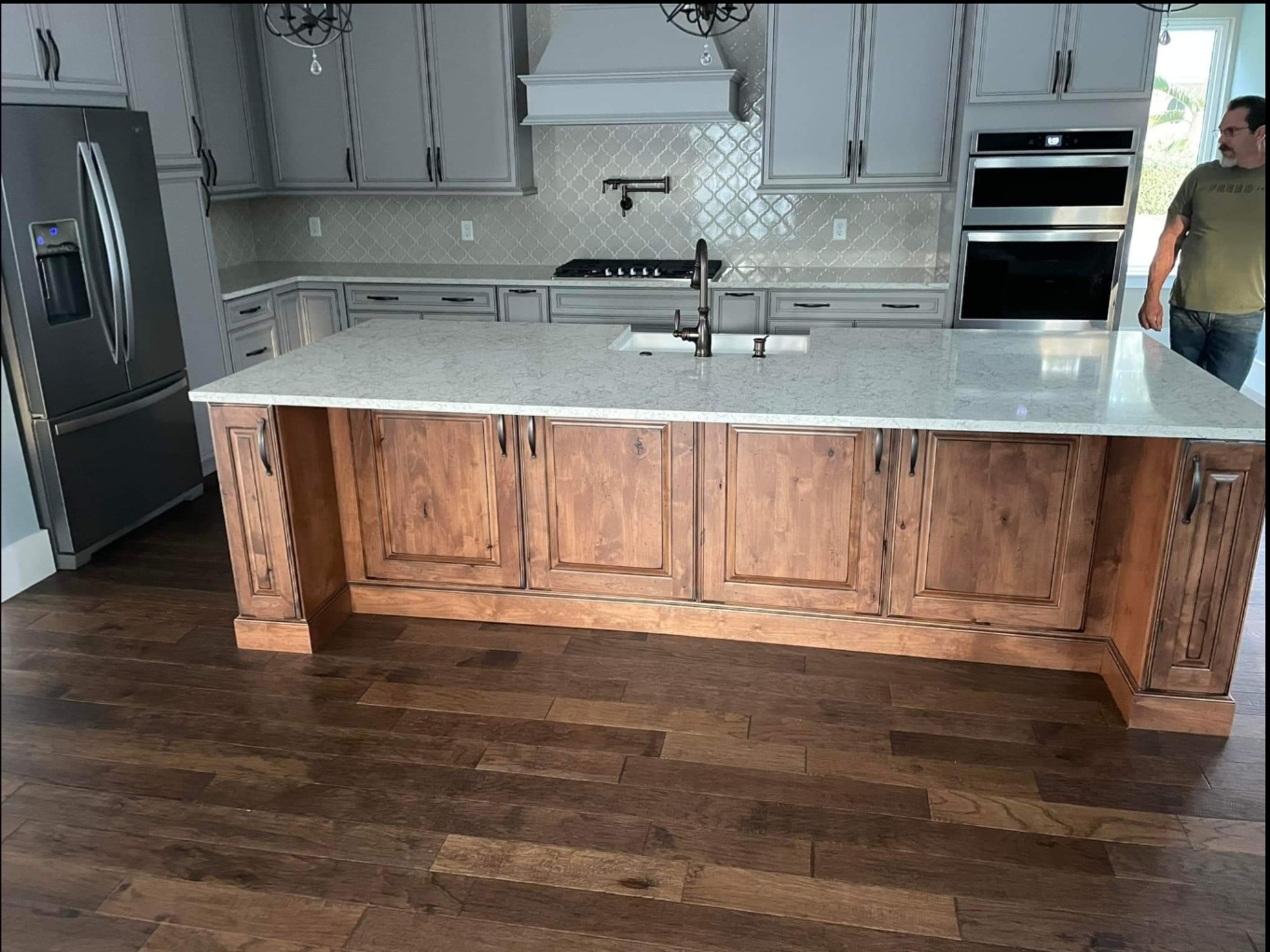

Small kitchens are a defining feature in many Chelsea QC homes. Whether it’s a cozy cottage, a charming older home, or a compact modern space, one challenge remains consistent: making every square inch count. The good news? A small kitchen doesn’t have to feel cramped, cluttered, or inefficient. With the right strategies, you can transform even the tightest layout into a kitchen that feels open, organized, and beautifully functional.
Chelsea QC homeowners have become experts at maximizing limited space through smart designs, intentional upgrades, and efficient storage solutions. This guide breaks down the most effective ways to improve flow, increase storage, and elevate your kitchen’s look—without needing a massive renovation budget.
1. Rethinking Layout: The Foundation of Every Functional Small Kitchen
A small kitchen lives or dies by its layout. In Chelsea QC, homeowners often deal with tight galley kitchens, U-shaped layouts, or one-wall kitchens in smaller homes. Making the most of these spaces begins with rethinking how people move, store, and cook.
A. The “Work Triangle” Still Matters
Even in compact kitchens, a clear path between:
- the sink,
- the stove, and
- the refrigerator
keeps the kitchen functional.
When these three elements are too close together, the kitchen feels cramped; too far apart, and space is wasted.
B. Consider a Partial Open-Concept
Full open-concept kitchens aren’t always possible in older Chelsea homes, but partial openness can help:
- Remove a half-wall
- Widen a doorway
- Add a passthrough window
This increases sightlines and brings more light into the kitchen.
C. Use Slimmer Appliances
European-style narrow appliances (24-inch or less) are perfect for small kitchens and still offer full functionality.
D. Avoid Oversized Islands
In a small kitchen, an oversized island creates congestion. Instead:
- Use a narrow island
- Choose a rolling island
- Install a peninsula that doesn’t block flow
Good layout is the #1 factor that determines whether a small kitchen feels cramped or comfortable.
2. Vertical Space: The Secret Weapon in Small Chelsea QC Kitchens
When floor space is limited, you must build upward. This is where small kitchens can truly shine.
A. Ceiling-Height Cabinets
Instead of leaving a 12-inch dust-collecting gap above cabinets:
- Extend cabinetry to the ceiling
- Add stacked cabinets
- Use upper cabinets for seasonal or rarely used items
This adds major storage without taking up any extra footprint.
B. Open Shelving for Everyday Items
Open shelves:
- Reduce visual heaviness
- Make the kitchen feel more spacious
- Provide fast access to daily essentials
Perfect for coffee mugs, dishes, spices, and mini décor.
C. Vertical Dividers for Trays & Boards
Store:
- baking sheets
- cutting boards
- serving trays
vertically in narrow slots—this frees up large cabinet spaces.
D. Tall, Narrow Pull-Outs
These slim storage solutions fit between appliances or at the end of cabinets. They’re perfect for:
- oils
- spices
- cans
- snack bins
Vertical space is almost always underused, and maximizing it dramatically improves small kitchen organization.
3. Smart Storage Solutions for Tight Spaces
In Chelsea QC homes, clever storage design is what separates a cramped kitchen from a functional one.
A. Corner Solutions That Actually Work
Say goodbye to unreachable, wasted corner cabinets. Better options include:
- Lazy Susans
- Pull-out carousels
- Corner drawers
- Blind-corner pull systems
These allow complete access to contents—no more digging.
B. Deep Drawers Instead of Lower Cabinets
Deep drawers offer:
- easier access
- better organization
- no need to kneel and reach
They’re ideal for pots, pans, lids, and storage containers.
C. Toe-Kick Drawers
The space beneath cabinets is often wasted. Toe-kick drawers are perfect for:
- baking trays
- cutting boards
- kids’ craft items
- small kitchen tools
They’re invisible until you open them.
D. Over-the-Fridge Storage
Instead of leaving the top of the fridge empty, install:
- a cabinet
- a shelf
- deep cubbies
This adds valuable storage for appliances, trays, or pantry items.
4. Multi-Purpose Furniture & Fixtures That Save Space
One of the ways Chelsea QC homeowners get creative is through pieces that serve more than one function.
A. Fold-Down Tables
A wall-mounted table folds down when not in use—perfect for:
- small kitchens
- one-wall layouts
- breakfast corners
B. Extendable Countertops
Adds prep space when you need it, tucks away when you don’t.
C. Island with Built-In Storage
An island can include:
- shelves
- drawers
- pull-out trash bins
- utensil storage
- wine cubbies
Small spaces benefit most from furniture that does double duty.
5. Light & Colour: Creating the Illusion of More Space
You don’t have to expand your kitchen—just make it look and feel bigger.
A. Use a Light, Neutral Palette
Soft whites, pale greys, warm creams, taupe, and muted greens are ideal.
B. Add Under-Cabinet Lighting
This:
- brightens workspaces
- eliminates shadows
- creates visual depth
C. Use Reflective Materials
Such as:
- gloss backsplash
- brushed metal finishes
- lightly veined countertops
These bounce light around the room.
D. Avoid Heavy Contrasts
Too many sharp dark/light contrasts make small kitchens feel smaller.
6. Decluttering: The Free Solution That Changes Everything
A small kitchen cannot afford visual chaos.
A. Remove Duplicates
No one needs:
- four spatulas
- three cheese graters
- 25 plastic containers with no matching lids
B. Hide Small Appliances
Choose specific storage zones for:
- coffee maker
- toaster
- blender
- mixer
Clear surfaces = larger-feeling kitchen.
C. Keep Only Daily Essentials on Counters
Example:
- coffee station
- knife block
- fruit bowl
Everything else should be stored.
7. Creating Functional Zones in Small Kitchens
Even the smallest kitchen becomes more efficient with clear zones.
Common Zones:
- Prep zone
- Cooking zone
- Cleaning zone
- Coffee/tea station
- Snack zone
- Lunch-prep zone for kids
Zones reduce clutter because everything has a place and purpose.
8. Choosing the Right Appliances for Small Kitchens
Don’t let appliances overcrowd the room.
Smart options include:
- counter-depth fridges
- 24-inch dishwashers
- microwave drawers
- slide-in ranges
- induction cooktops
Bonus:
A single large sink is more functional than a double sink in a small kitchen.
9. Small Renovations That Make a Big Impact in Chelsea QC
Even small-scale upgrades can dramatically improve space:
- convert lower cabinets to drawers
- add a slim pantry pull-out
- reconfigure corner cabinets
- remove soffits and extend cabinets upward
- add better lighting
- install a compact island
Small kitchens benefit most from targeted, intentional improvements, not full demolition.
10. Chelsea QC’s Advantage: Quality Over Size
Small kitchens in Chelsea QC have one major advantage:
homeowners tend to invest thoughtfully.
Because space is limited, every choice must be:
- practical
- beautiful
- long-lasting
This often leads to kitchens that are:
- cleaner
- better designed
- more cohesive
- more enjoyable
Small kitchens aren’t a limitation—they’re an opportunity for smarter, more intentional living.
Conclusion
Chelsea QC homeowners prove every day that a small kitchen can be incredibly functional, stylish, and spacious-feeling with the right strategies. By optimizing vertical space, improving layout flow, minimizing clutter, and choosing multipurpose storage solutions, you can transform even the tiniest kitchen into a comfortable, efficient, beautiful space you genuinely love.
Small kitchens require creativity—not compromise. With smart planning, every inch becomes valuable, every corner becomes useful, and the kitchen becomes a place that works perfectly for your lifestyle.
———————————————————————————
Solutions pour Petites Cuisines : Comment les Propriétaires de Chelsea QC Optimisent Chaque Centimètre
(Version Française Complète – 2,000+ mots)
Les petites cuisines sont très courantes dans les maisons de Chelsea QC. Qu’il s’agisse d’un chalet chaleureux, d’une maison ancienne ou d’une construction moderne compacte, une question revient toujours : comment faire fonctionner un petit espace efficacement ?
Heureusement, les propriétaires de Chelsea QC excellent à transformer les petites cuisines en espaces fonctionnels, lumineux et bien organisés. Voici les meilleures stratégies pour maximiser l’espace, améliorer le rangement et rendre la cuisine plus agréable sans dépenser une fortune.
1. Repenser l’agencement : la base d’une petite cuisine fonctionnelle
Un petit espace dépend entièrement d’un bon plan d’aménagement.
A. Le triangle de travail reste essentiel
Le triangle :
- évier
- cuisinière
- réfrigérateur
doit être fluide, clair et non encombré.
B. Ouvrir partiellement l’espace
Même si on ne peut pas toujours abattre un mur complet dans une maison ancienne, on peut :
- ouvrir une demi-cloison
- élargir une ouverture
- créer une fenêtre-passe-plat
Cela améliore la lumière et la circulation.
C. Opter pour des électroménagers compacts
Des modèles de 24 pouces (ou moins) sont parfaits pour les petites cuisines.
D. Éviter les îlots trop massifs
Privilégier :
- les îlots étroits
- les îlots mobiles
- les péninsules compactes
2. Exploiter la hauteur : la clé pour maximiser l’espace
A. Armoires pleine hauteur
Les armoires jusqu’au plafond offrent du rangement précieux.
B. Étagères ouvertes
Parfaites pour la vaisselle, les tasses, les épices, et ajoutent une sensation de légèreté.
C. Diviseurs verticaux
Idéal pour les plateaux, planches, plaques de cuisson.
D. Colonnes étroites coulissantes
Ces unités prennent très peu de place et offrent un rangement efficace.
3. Solutions de rangement intelligent
A. Optimisation des coins
Éliminer les coins inutilisables grâce à :
- lazy susan
- systèmes coulissants
- tiroirs d’angle
B. Tiroirs profonds
Meilleur accès, meilleure organisation, moins d’efforts.
C. Tiroirs dans les plinthes (toe-kick)
Espace parfait pour les objets plats.
D. Espace au-dessus du frigo
À transformer en étagère ou armoire fermée.
4. Meubles multifonctions & éléments polyvalents
A. Tables rabattables
B. Comptoirs extensibles
C. Îlots avec rangement intégré
Chaque pièce a plusieurs rôles — idéal pour les petits espaces.
5. Lumière & couleurs : donner une impression de grandeur
A. Palette neutre claire
B. Éclairage sous les armoires
C. Surfaces réfléchissantes
D. Éviter les contrastes trop forts
Ces éléments créent un effet visuel d’agrandissement.
6. Désencombrement : solution simple et gratuite
A. Éliminer les doublons
B. Ranger les petits électros
C. Garder les comptoirs dégagés
Un espace dégagé semble plus grand.
7. Créer des zones fonctionnelles
Zones possibles :
- préparation
- cuisson
- nettoyage
- café / thé
- collations
- lunch scolaires
Les zones organisent la cuisine et simplifient les routines.
8. Choisir les bons électroménagers
Options idéales :
- réfrigérateurs profondeur comptoir
- lave-vaisselle 18–24 pouces
- cuisinières étroites
- micro-ondes tiroir
- plaques à induction compactes
Utiliser un grand évier unique aide aussi à gagner de l’espace.
9. Petites rénovations, grands résultats
Quelques améliorations ciblées peuvent transformer la cuisine :
- remplacer armoires basses par tiroirs
- installer une colonne garde-manger étroite
- moderniser les coins
- retirer les caissons au-dessus des cabinets
- améliorer l’éclairage
10. L’avantage des petites cuisines à Chelsea QC
Les petites cuisines encouragent les choix réfléchis :
- design cohérent
- utilisation intelligente de l’espace
- finitions de qualité
- solutions durables
La taille réduit peut-être la surface, mais augmente souvent la qualité des décisions.
Conclusion
Les petites cuisines de Chelsea QC démontrent que l’espace limité n’est jamais un obstacle à la fonctionnalité, au confort ou au style. Avec une bonne planification, des solutions verticales, des meubles multifonctions et des idées de rangement intelligentes, chaque centimètre compte et devient utile. Une petite cuisine bien conçue peut être plus agréable et plus fonctionnelle qu’une grande cuisine mal organisée.
Avec intention, créativité et stratégie, votre petite cuisine devient un espace lumineux, efficace et parfaitement adapté à votre vie quotidienne.