
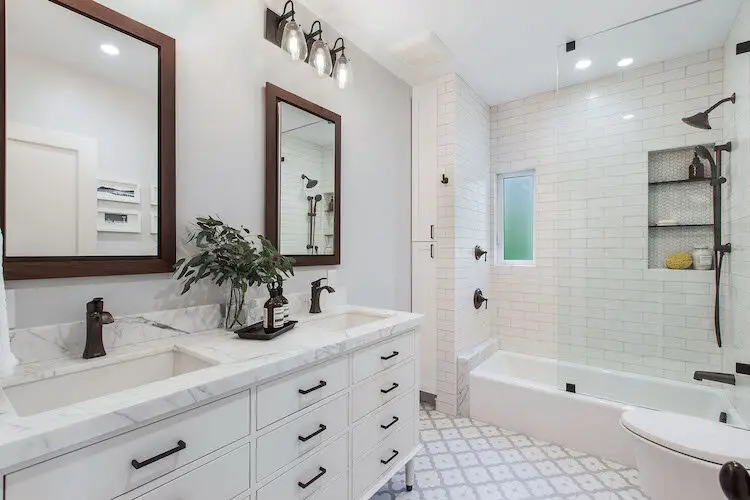

Small bathrooms are common in many Hull homes, especially in older properties, townhouses, and compact layouts. While limited square footage can feel restrictive, a small bathroom does not have to feel cramped, outdated, or uncomfortable. With the right design choices, even the smallest bathroom can become functional, stylish, and surprisingly spacious.
A successful small bathroom remodel in Hull is not about squeezing in more features—it’s about using space intelligently, choosing the right materials, and designing around how the bathroom is actually used. This guide breaks down practical, proven design strategies that genuinely work for small bathrooms, helping homeowners improve comfort, storage, and usability without unnecessary complexity.
Why Small Bathroom Remodeling Matters in Hull Homes
Many small bathrooms in Hull were built at a time when design priorities were different. Narrow layouts, oversized tubs, limited storage, and poor lighting are common issues. Over time, these shortcomings affect daily routines and make the space feel more frustrating than functional.
Renovating a small bathroom allows homeowners to correct these problems while improving durability and efficiency. Because bathrooms are high-use spaces, even modest improvements can have a big impact on daily comfort and long-term value.
A well-designed small bathroom also increases a home’s appeal. Buyers consistently value bathrooms that feel clean, bright, and efficient—especially in compact homes where every square foot counts.
Start With Layout: The Foundation of Every Smart Remodel
In small bathrooms, layout matters more than finishes. A beautiful tile or vanity won’t help if the room feels tight or awkward to use.
Repositioning Fixtures for Better Flow
Older bathrooms often have fixtures placed without regard for movement. During a remodel, repositioning elements like the vanity or toilet—sometimes by just a few inches—can dramatically improve flow.
Clear walking paths and unobstructed door swings are essential. Pocket doors or outward-swinging doors are often smart solutions for tight spaces.
Choosing the Right Shower or Tub Configuration
Large tubs can overwhelm small bathrooms. Many Hull homeowners choose to replace bulky tubs with walk-in showers that take up less space and improve accessibility. For homes that need a tub, compact tub designs or tub-shower combinations with clean lines work best.
Glass shower enclosures, rather than curtains or opaque walls, help the room feel more open by allowing light to travel through the space.
Use Visual Space to Your Advantage
When square footage is limited, visual tricks play a big role in making the bathroom feel larger.
Light Colours and Simple Palettes
Light, neutral colours reflect light and reduce visual clutter. Soft whites, warm greys, light beige, and muted tones help small bathrooms feel brighter and more open.
Using the same colour on walls and large surfaces creates continuity, preventing the room from feeling chopped up.
Large Tiles, Fewer Lines
Contrary to popular belief, large-format tiles often work better in small bathrooms than small tiles. Fewer grout lines create a smoother, less busy look that visually expands the space.
Running floor tiles into the shower area further enhances continuity and openness.
Mirrors That Do More Than Reflect
Mirrors are one of the most effective tools in small bathroom design. Large mirrors or mirrored cabinets reflect both light and space, instantly making the room feel larger.
Positioning mirrors opposite light sources—natural or artificial—amplifies their effect.
Smart Storage: Less Clutter, More Function
Clutter makes small bathrooms feel even smaller. Thoughtful storage solutions are essential.
Wall-Mounted Vanities
Floating or wall-mounted vanities free up floor space, making the bathroom feel lighter and easier to clean. They also create the illusion of a larger footprint.
Choosing vanities with deep drawers instead of doors maximizes usable storage while keeping essentials organized.
Recessed Storage and Niches
Recessed shelves in shower walls or above toilets provide storage without protruding into the room. Built-in niches for shampoo and soap eliminate the need for bulky corner caddies.
Vertical Storage Solutions
When floor space is limited, vertical space becomes valuable. Tall, narrow cabinets or shelving units provide storage without crowding the room.
Lighting: A Game Changer in Small Bathrooms
Poor lighting is one of the biggest reasons small bathrooms feel uncomfortable.
Layered Lighting Design
Effective lighting combines multiple sources:
- Ambient lighting for overall brightness
- Task lighting around mirrors for grooming
- Accent lighting to add warmth and depth
This layered approach prevents harsh shadows and creates a more balanced, inviting environment.
Warm, Even Illumination
Lighting should be bright enough to be functional but warm enough to feel comfortable. Even illumination helps the bathroom feel larger and more welcoming.
Durable Materials That Make Sense for Small Spaces
Small bathrooms demand materials that can withstand constant moisture while remaining easy to maintain.
Slip-Resistant Flooring
Safety is critical, especially in compact bathrooms. Slip-resistant tile or textured flooring provides traction without sacrificing style.
Moisture-Resistant Finishes
Wall finishes, grout, and sealants should be selected for durability. Proper waterproofing behind tiles and around fixtures is essential to protect the structure of the home.
Low-Maintenance Surfaces
Smooth, easy-to-clean materials reduce upkeep and help the bathroom look better longer.
Designing for Comfort Without Overcrowding
Comfort does not require excess. In small bathrooms, simplicity often leads to better results.
Compact Fixtures That Perform Well
Modern compact toilets, sinks, and showers are designed to save space while maintaining performance. Choosing appropriately scaled fixtures ensures the bathroom feels balanced rather than crowded.
Thoughtful Accessory Placement
Towel bars, hooks, and toilet paper holders should be placed where they are convenient but not intrusive. Well-placed accessories improve usability without adding visual clutter.
Common Small Bathroom Remodeling Mistakes to Avoid
Understanding what not to do is just as important as knowing what works.
- Overusing dark colours that absorb light
- Installing oversized fixtures that dominate the room
- Ignoring ventilation, leading to moisture problems
- Adding too many decorative elements that clutter the space
- Focusing on style at the expense of layout and function
Avoiding these mistakes ensures the remodel delivers lasting value and comfort.
Planning a Small Bathroom Remodel in Hull
Successful remodeling starts with realistic planning.
Understand Your Priorities
Identify what bothers you most about the current bathroom—lack of storage, poor lighting, awkward layout—and address those issues first.
Balance Budget and Impact
In small bathrooms, layout improvements, waterproofing, and lighting upgrades often provide more value than expensive decorative features.
Design for Long-Term Use
Choosing durable materials and timeless design ensures the bathroom remains functional and attractive for years to come.
The Long-Term Benefits of Remodeling a Small Bathroom
A well-designed small bathroom offers:
- Improved daily comfort
- Better organization and storage
- Easier cleaning and maintenance
- Increased home value
- A space that feels larger and more enjoyable
Because bathrooms are used daily, the return on investment is felt immediately.
Conclusion: Small Bathroom, Smart Design
Small bathroom remodeling in Hull is about making thoughtful choices that maximize comfort, style, and function. With smart layouts, proper lighting, efficient storage, and durable materials, even the smallest bathroom can feel open, practical, and inviting.
A successful remodel proves that limited space does not limit potential—it simply demands smarter design.
Rénovation de petites salles de bain à Hull : des idées de design qui fonctionnent vraiment
Les petites salles de bain sont fréquentes dans de nombreuses maisons de Hull, en particulier dans les propriétés plus anciennes et les maisons à espace restreint. Bien que la superficie limitée puisse sembler contraignante, une petite salle de bain peut devenir fonctionnelle, moderne et confortable grâce à une rénovation bien pensée.
Une rénovation réussie ne consiste pas à ajouter plus d’éléments, mais à utiliser intelligemment l’espace, à choisir des matériaux adaptés et à concevoir la pièce selon son usage réel.
Pourquoi rénover une petite salle de bain à Hull
Les salles de bain plus anciennes présentent souvent des problèmes d’aménagement, de rangement et d’éclairage. Ces lacunes rendent l’espace moins pratique et moins agréable à utiliser au quotidien.
La rénovation permet de corriger ces défauts tout en améliorant la durabilité et le confort. Même de petites améliorations peuvent transformer l’expérience quotidienne et augmenter la valeur de la maison.
L’aménagement : la base d’une rénovation efficace
Dans une petite salle de bain, l’aménagement est prioritaire.
Repenser la disposition des éléments
Déplacer légèrement la vanité, la toilette ou la douche peut améliorer considérablement la circulation. Les portes coulissantes ou s’ouvrant vers l’extérieur sont souvent idéales pour gagner de l’espace.
Choisir la bonne configuration douche ou bain
Les grandes baignoires encombrent souvent les petites salles de bain. Une douche à l’italienne ou une douche compacte améliore l’accessibilité et libère de l’espace visuel.
Les parois vitrées permettent à la lumière de circuler et donnent une impression de grandeur.
Agrandir visuellement l’espace
Couleurs claires et palettes simples
Les tons clairs reflètent la lumière et rendent la pièce plus lumineuse. Les couleurs neutres et uniformes créent une continuité visuelle.
Carreaux grand format
Les carreaux de grand format réduisent les lignes de joint, ce qui rend l’espace plus fluide et moins encombré visuellement.
Miroirs bien positionnés
Les grands miroirs amplifient la lumière et donnent l’illusion d’un espace plus vaste.
Solutions de rangement intelligentes
Vanités murales
Les vanités suspendues dégagent le sol et facilitent le nettoyage tout en donnant une sensation de légèreté.
Rangements encastrés
Les niches murales et les étagères encastrées offrent du rangement sans empiéter sur l’espace.
Exploiter la hauteur
Les armoires verticales et les étagères hautes maximisent le rangement dans les espaces restreints.
L’importance de l’éclairage
Un bon éclairage transforme une petite salle de bain.
Éclairage en couches
Combiner éclairage général, éclairage de tâche et éclairage d’ambiance améliore le confort et la fonctionnalité.
Lumière uniforme et chaleureuse
Une lumière bien répartie évite les zones d’ombre et rend la pièce plus accueillante.
Choisir des matériaux durables
Planchers antidérapants
La sécurité est essentielle dans les petites salles de bain. Les surfaces antidérapantes réduisent les risques de chute.
Finitions résistantes à l’humidité
Des matériaux adaptés prolongent la durée de vie de la salle de bain et protègent la structure de la maison.
Entretien simplifié
Des surfaces faciles à nettoyer réduisent l’effort d’entretien quotidien.
Confort sans encombrement
Appareils compacts et efficaces
Les équipements modernes offrent d’excellentes performances tout en occupant moins d’espace.
Accessoires bien placés
Des porte-serviettes et crochets bien positionnés améliorent l’ergonomie sans surcharger la pièce.
Erreurs fréquentes à éviter
- Utiliser trop de couleurs foncées
- Installer des éléments trop volumineux
- Négliger la ventilation
- Ajouter trop d’éléments décoratifs
- Prioriser l’apparence au détriment de la fonctionnalité
Planifier sa rénovation
Une bonne planification est essentielle.
- Identifier les problèmes actuels
- Prioriser les améliorations fonctionnelles
- Choisir des matériaux durables
- Concevoir pour un usage à long terme
Les avantages à long terme
Une petite salle de bain bien rénovée offre :
- Un meilleur confort
- Un rangement optimisé
- Un entretien facilité
- Une valeur ajoutée à la maison
- Une expérience quotidienne améliorée
Conclusion
La rénovation d’une petite salle de bain à Hull repose sur des choix réfléchis et une conception intelligente. Avec un bon aménagement, des solutions de rangement adaptées et des matériaux durables, même les plus petits espaces peuvent devenir fonctionnels et élégants.
Une petite salle de bain bien conçue prouve que l’espace n’est jamais une limite—seulement une occasion de mieux concevoir.